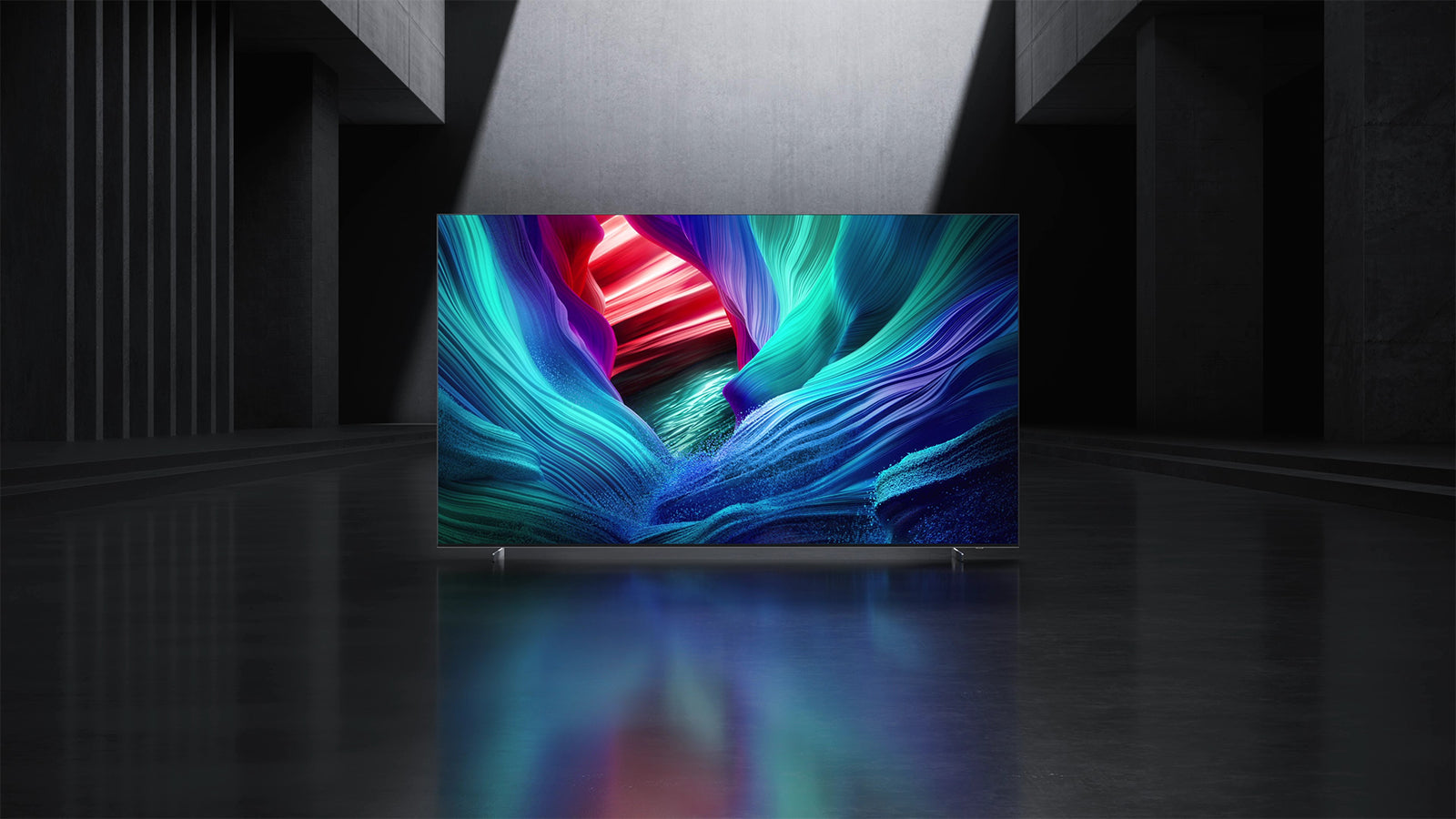
Television technology has taken another leap forward with the arrival of RGB TVs - a new backlighting approach that’s changing the way we think about picture quality. RGB Mini LED is the latest innovation in display technology, building on traditional Mini LED to deliver enhanced colour, brightness control and deeper contrast - setting a new benchmark for what a premium TV picture can look like.
In this handy guide, we’ll break down everything you need to know about RGB TVs. We will explore how it works, how it differs from traditional Mini LED TVs, and why it's generating so much buzz amongst TV buyers, so you can feel more confident when shopping for a new TV.
TV jargon break down-
|
RGB |
Red, Green and Blue |
|
LED |
Light Emitting Diode |
What is an RGB TV & how does it work?
Traditional Mini LED TVs use thousands of tiny LEDs, and they are typically white or blue. These LEDs then shine through colour filters or a quantum dot layer to create the picture we see on our screens. However, during the filtering process, some light can be lost which reduces the overall efficiency and colour precision.
RGB Mini LED takes a different approach. Rather than relying on filters to produce colour, it uses individual red, green and blue Mini LEDs directly within the backlight. This means colour is generated right at the source, rather than being adjusted through filters and a white backlight, so each zone can be tuned more precisely.

Sony's RGB Mini LED diagram

Sony's Mini LED diagram
What are the benefits of RGB Mini LED technology?
There are a number of key benefits that come with RGB technology. Let’s explore these benefits together.
-
Higher brightness with enhanced colour accuracy-
As colours aren’t passed through filters, they can appear more vibrant, accurate and consistent - even at high brightness levels. RGB Mini LED technology can achieve exceptional brightness without washing out colours, making it an excellent choice for HDR movies, TV shows and other high-quality content.
-
Refined local dimming control-
RGB Mini LED adjusts colour and brightness together at the same time, rather than simply dimming the light. This creates deeper blacks, more vibrant colours and greater control over picture quality. Due to the colour and brightness precise control, the glowing halos that often appear around bright objects on LED TVs are significantly reduced.
-
Improved efficiency-
With less filtering, less light is wasted during the display process, enabling RGB TVs to achieve higher brightness levels more efficiently.
-
Strong HDR Performance-
HDR movies, TV shows and games look even more impressive with RGB Mini LED, thanks to its enhanced contrast, increased brightness and richer colours.

Sony's RGB Backlight diagram
Is an RGB TV right for you?
An RGB TV is ideal for anyone looking for cutting-edge picture quality, a large, bright display, and an immersive viewing experience. It is especially well suited for film enthusiasts, gamers and sports fans who want to get the most out of their HDR content, with vibrant colours, impressive brightness and enhanced detail. RGB TV technology is also a great choice for bright living rooms where reflections and natural light can make traditional screens harder to see, delivering a clearer, more impactful picture without needing to close the curtains.
Gaming and sports benefits-
The impressive brightness levels achieved by RGB Mini LED help deliver a vivid, detailed picture, even when gaming or watching sports in a brightly lit room. The clear, high-contrast images ensure you can see every detail and keep up with fast-moving action. For console gamers, support for modern HDMI 2.1 features such as 4K at 120Hz, Variable Refresh Rate (VRR) and Auto Low Latency Mode (ALLM) makes RGB TVs an excellent choice for a smoother gaming experience.
As technology continues to develop, RGB Mini LED is set to become an important part of the future of premium TVs, offering viewers a more detailed, colourful, and engaging way to enjoy their favourite content.
If you’re interested in learning more about choosing the right RGB TV, take a look at our RGB TV Buyer’s Guide for expert tips, advice and our top picks to help you make the right choice.
In our RGB TV comparison guide, we explore how different TV technologies compare in terms of performance, features and overall value.